
Reduce
Remove expired, unused, duplicated, or misplaced items before adding more storage.
Home Organization Guides
Use this guide as a practical starting point for creating storage systems that feel clear, useful, and easy to maintain—from wardrobe shelves and pantry zones to desks, bathrooms, entryways, and utility spaces.

The TidyMorrow method
The most useful system begins with the way the room is actually used. Start with what creates friction, then build storage around access, frequency, visibility, and the easiest path back to order.
Start by identifying the need
Different rooms produce different types of clutter. Begin with the area that creates the most friction in your day, then use the matching guide below to build a system around it.
Use vertical space, group clothing by frequency, and create dedicated zones for shoes, accessories, and folded items.
Guide 02Organize around cooking, restocking, visibility, and easy access to the food and tools used most often.
Guide 03Separate daily essentials from backups and create simple zones for personal care, cleaning, laundry, and supplies.
Guide 04Use hidden, soft, and under-bed storage to control visual clutter while keeping the room restful and easy to reset.
Guide 05Keep documents, desktop tools, chargers, and cables organized by task so the work surface stays clear.
Guide 06Use bins, carts, and flexible storage to create adaptable systems for supplies that move between spaces.

Closet & wardrobe
Keep the most frequently worn items in the easiest reach zones. Move occasional pieces higher, lower, or farther back, and give shoes, accessories, folded clothing, and hanging garments their own clear locations.

Kitchen & pantry
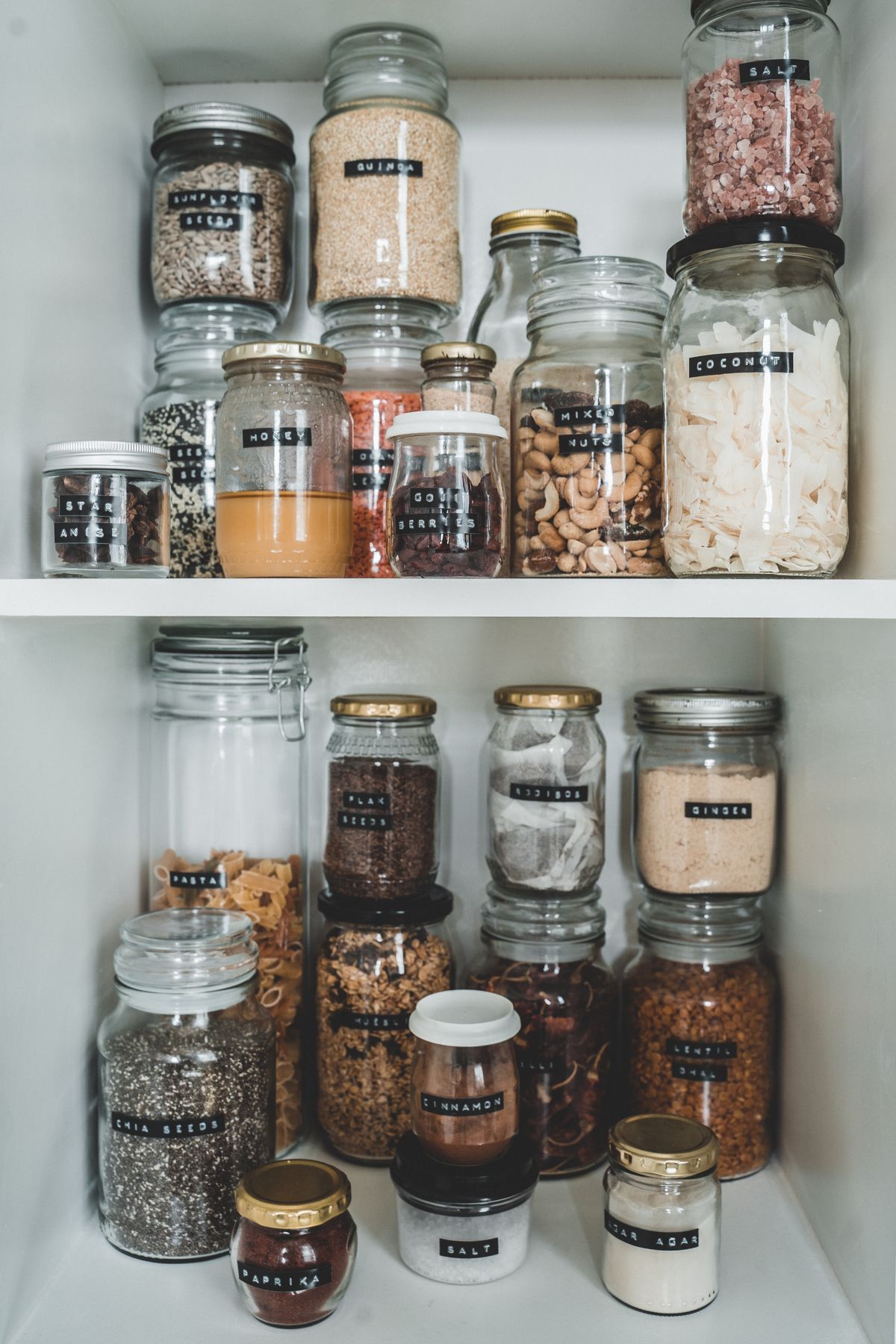
A useful pantry is easy to scan. Group similar items together, keep everyday ingredients at eye level, and use containers or bins to create repeatable zones for dry goods, snacks, spices, beverages, and backup stock.

Bathroom & laundry
Keep everyday toiletries and laundry tools closest to where they are used, while refills, spare towels, and cleaning supplies sit in secondary storage. This keeps counters clearer and makes restocking easier.
The four-part formula
The room may change, but the most dependable organizing process stays remarkably consistent.
Remove expired, unused, duplicated, or misplaced items before adding more storage.
Bring similar items together so quantity, frequency, and location become easier to understand.
Position items based on how often they are used and where the action naturally happens.
Keep the system simple enough that putting things back never feels like a separate project.

Bedroom & living
Bedrooms and living spaces benefit from storage that controls visual clutter without making essentials hard to reach. Use under-bed, bedside, soft, and entryway storage to absorb the everyday objects that naturally gather in these rooms.
Office & technology
A functional workspace starts by separating what must remain visible from what only needs to remain accessible. Keep active documents and essential tools close, then move archives, spare cables, and technology accessories into dedicated storage.

Utility & multipurpose
Multipurpose spaces work best with storage that can adapt. Use carts, stackable bins, and clearly grouped supplies so seasonal, cleaning, craft, or household items can move without losing their organization.
Support around the system
TidyMorrow pairs its organized-living approach with clear store policies designed to keep the ordering experience easy to understand.
Need help choosing a starting point?
Our support team is available 24/7 for questions about products, orders, storage categories, shipping, returns, exchanges, or finding a solution for a particular room.